Tropical ArchitectureApril 28, 2026
Beyond ornamentation, tropical living systems are transforming the way architecture is experienced through biodiversity, adaptation and living ecosystems.
Since childhood, more than 25 years ago, I grew up bringing wild tropical plants from my grandmother’s home in Santa Ana into small green spaces in Pavas, Costa Rica.
Many of these plants were considered nothing more than “weeds”. Species often removed, ignored or replaced by ornamental plants imported from other tropical regions around the world.
But something interesting began happening every time these native species were reintroduced into urban environments.
The plants adapted naturally. They grew with ease. And little by little, insects, amphibians, birds and other forms of life started returning to spaces where biodiversity had long disappeared.
That was when I began understanding that tropical plants are not simply decorative objects.
They function as living systems capable of rebuilding ecological relationships even within human spaces.
Much of modern landscaping and architecture still approaches plants from a purely aesthetic perspective. Visually attractive spaces are created, yet they often remain ecologically empty, what I sometimes refer to as “green deserts”.
At Wild Tropicals, we have always worked from a different perspective.
The goal is not simply to place beautiful plants inside a space. The goal is to build living environments that function naturally within the tropical context, using species capable of adapting, evolving and reconnecting human spaces with the biodiversity that defines Costa Rica.
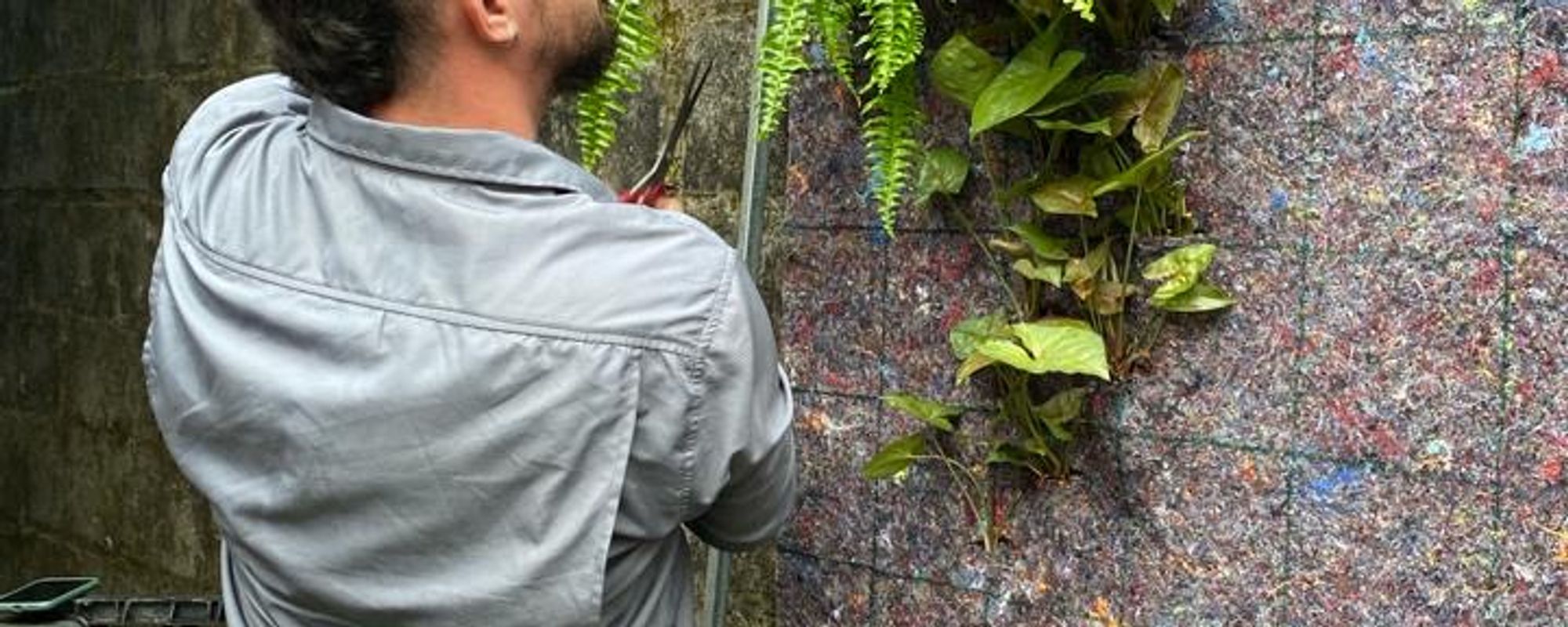
When a vertical ecosystem is properly designed, most people only notice the visual result. But behind it, a complex biological process is constantly taking place.
Plants respond to humidity, search for light, modify their growth patterns and begin generating relationships with insects, birds and microorganisms. With native species, these interactions tend to develop in a much more stable and natural way, often requiring less human intervention over time.
Part of our philosophy is understanding that many living systems actually perform better when they are allowed to develop more naturally and with less manipulation.
Costa Rica possesses extraordinary biodiversity, yet many urban environments fail to reflect that tropical identity. Exotic species disconnected from the local ecological context are commonly used, while native plants with enormous biological, architectural and ecological value remain overlooked.
For us, designing living spaces also means recovering part of that identity.
Using native tropical flora allows us to create spaces that are not only more resilient and functional, but also capable of expressing the natural essence of Costa Rica itself.
At Wild Tropicals, we understand the concept of premium differently.
Premium is not simply something expensive or visually attractive.
Premium is a living system that functions correctly, evolves naturally and integrates harmoniously with both space and environment.
Much of this vision also exists beyond the formal projects of Wild Tropicals.
Through elmae_delasmatas, my visual journal on Instagram, I share part of this personal journey with tropical flora, Costa Rican biodiversity and the ecosystems that continue to inspire this work.
That space works as a more human and everyday extension of the same pursuit: observing, documenting and better understanding the tropical plants around us.